
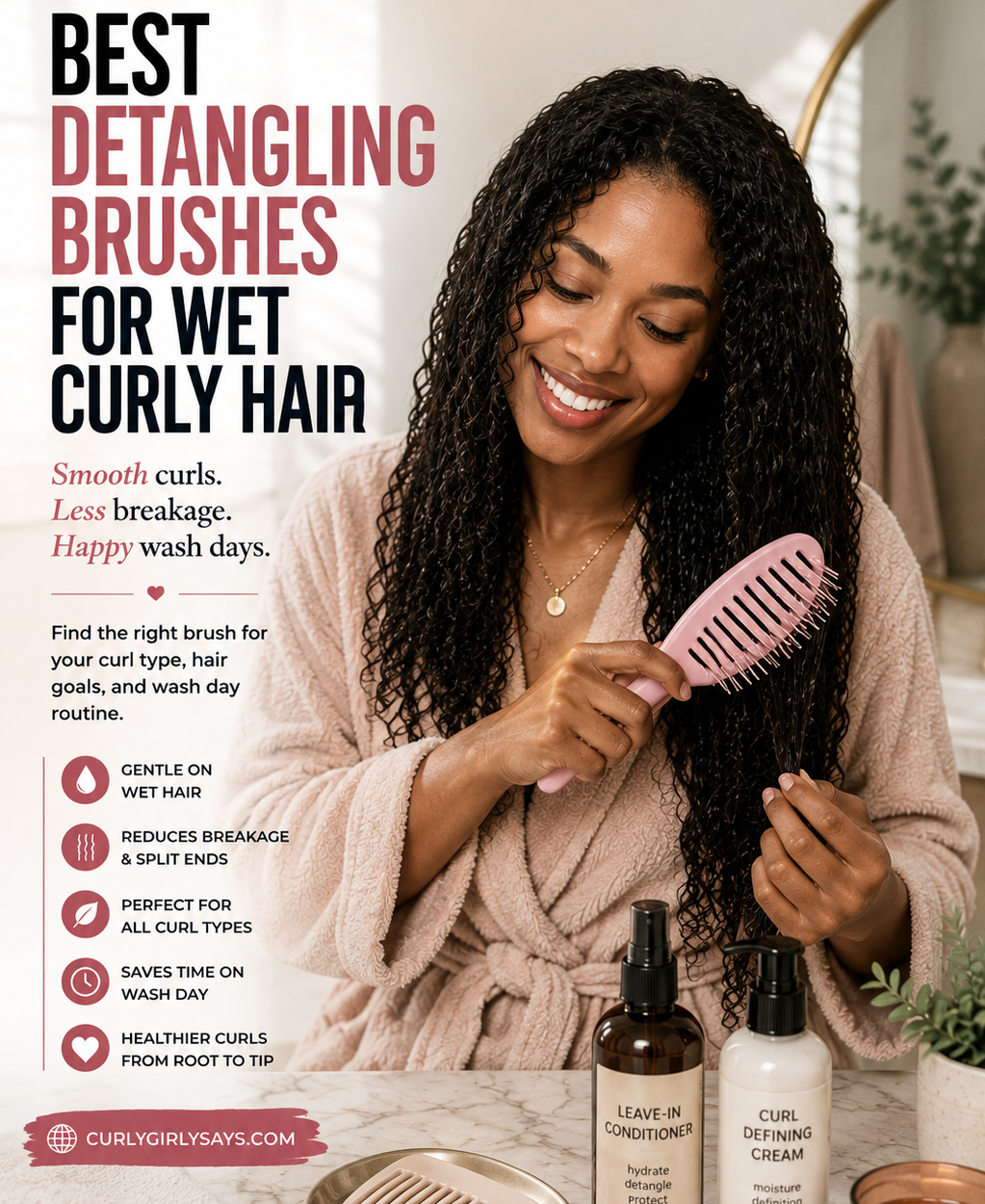

When your hair is wet, it’s at its most vulnerable, especially for curls prone to tangles. Trying to detangle with the wrong tool feels like pulling apart a fishing net with your bare hands, leading to more frizz and broken strands than you’d like. The good news is, finding the best detangling brushes for wet curly hair can turn that frustrating chore into a surprisingly gentle part of your routine.
This article focuses on brushes specifically designed to glide through those knots with minimal fuss, helping you keep your curls intact and your scalp happy. We’ll look at options that make detangling easier and protect your hair from unnecessary stress.
Detangling wet curly hair doesn’t have to be a battle. The right brush makes all the difference, helping you work through knots gently and without unnecessary breakage.
Compare at a Glance
Compare these top detangling brushes to find the perfect match for your wet curly hair.
Swipe to compare →
| Product | Hair Type Suitability | Bristle/Pin Flexibility | Detangling Style | Price Range |
|---|---|---|---|---|
| Tangle Teezer The Wet Detangler Hairbrush | Fine to medium curls | Flexible | Gentle, reduces breakage | $$ |
| Denman D3 Original Styling Brush | Medium to thick curls | Stiffer (customizable) | Detangles & defines | $$ |
| Felicia Leatherwood Detangler Brush | Thick, coily, sensitive scalp | Super-flexible, wide-spaced | Minimizes pulling/pain | $$$ |
| EZ Detangler Brush | Thick, coily (severe tangles) | Flexible (adjustable) | Strong detangling, major knots | $ |
Quick answer: The best detangling brushes for wet curly hair typically feature flexible bristles or widely spaced teeth that can gently separate strands without snagging or pulling. Look for brushes designed to be used in the shower, often with a non-slip handle, and always apply conditioner or a leave-in first.
My pick: The Tangle Teezer Wet Detangler is a great all-around choice for many curl types.
Why Detangling Wet Curls is So Important (and Often Tricky)
Your curls naturally intertwine, which is part of their charm, but it also means they can knot up easily, especially between wash days. Detangling dry hair is a recipe for breakage because the strands are less elastic and more prone to snapping. Water helps lubricate the hair shaft, and conditioner adds slip, allowing strands to separate more easily.
If you skip this step or use the wrong tool, you might find your curls struggling with definition or even stalled growth because of excessive breakage. The goal is to gently persuade your curls apart, not rip through them. Think about it like untangling a delicate necklace; you wouldn’t yank it, you’d carefully work out each knot.
Tangle Teezer Wet Detangler Hairbrush
This brush is a favorite for a reason. Its unique two-tiered tooth technology means longer, more flexible teeth detangle, while shorter teeth smooth the hair cuticle. It’s designed to be used on wet hair and works wonders in the shower with your favorite conditioner. The ergonomic handle makes it easy to grip even with slippery hands.
- Who it suits: This is an excellent choice for almost all curl types, from wavy to coily, especially if you have fine to medium hair and experience moderate tangling.
- What makes it different: The soft, flexible bristles are gentle on delicate wet strands, reducing breakage and making the detangling process much faster.
- Who might NOT like it: If you have extremely dense or very coily hair that forms super tight knots, you might need something with slightly stiffer or wider-spaced bristles to start before moving to this brush for smoothing.
Denman D3 Original Styling Brush
The Denman brush is a classic for curly hair, often used not just for detangling but also for clumping and defining curls. Its removable rows of nylon pins, set in a rubber pad, provide excellent tension to glide through knots. You can customize it by removing some rows of pins to increase spacing, which is a neat trick for different curl densities.
- Who it suits: Best for medium to thick curls and coils. It’s particularly good for those who want a tool that can detangle and help define their curl pattern at the same time.
- What makes it different: The ability to remove rows of pins gives you control over the brush’s tension and spacing, adapting it to your specific needs.
- Who might NOT like it: The pins are not as flexible as the Tangle Teezer, so it can feel a bit too firm if your hair is very fine or exceptionally fragile. Some find the handle a bit small for larger hands.
Felicia Leatherwood Detangler Brush
This brush stands out with its widely spaced, flexible bristles that really bend and move with your hair. It’s built to reduce the pain and struggle of detangling, especially for tighter curl patterns. The design helps prevent snagging by allowing the bristles to separate tangled hair sections without pulling from the scalp.
- Who it suits: Ideal for thick, coily, or highly textured hair that experiences significant tangling. It’s also a good option for anyone with a sensitive scalp.
- What makes it different: The super-flexible, widely spaced bristles are key. They are designed to move with the hair rather than against it, minimizing tension and reducing breakage dramatically.
- Who might NOT like it: Because the bristles are so flexible, it might not provide enough tension for someone with very loose waves or fine curls looking for strong curl clumping during detangling.
EZ Detangler Brush
The EZ Detangler features separated bristles with a detachable bracket that you can use to adjust the width and stiffness of the brush. This design allows it to expand and contract, conforming to your head while gently separating even stubborn knots. It’s known for making detangling much quicker and less painful.
- Who it suits: Excellent for thick, coily, and kinky hair types that struggle with severe tangling. If detangling usually takes a long time and involves a lot of pulling, this brush can simplify the process.
- What makes it different: The flexible, separated rows of bristles combined with the ability to adjust stiffness makes it highly adaptable. It covers a larger surface area than some other brushes.
- Who might NOT like it: For those with very fine hair, the widely spaced, flexible bristles might not feel like they are doing enough to smooth the hair or get all the small knots. The handle can also feel a bit bulky to some.
Which One Should You Choose?
Choosing the right detangling brush really depends on your hair type and specific needs:
- If your hair is fine to medium and you want an all-around gentle detangler that’s easy to use, the Tangle Teezer Wet Detangler is a great starting point.
- If you have medium to thick hair and want a brush that can both detangle and help shape your curls for definition, the Denman D3 Original Styling Brush is a classic, especially with its customizable rows.
- If your hair is very thick, coily, or prone to extreme tangles and you prioritize pain-free detangling, the Felicia Leatherwood Detangler Brush will likely be your best friend.
- If you have very dense or coily hair and want a brush that can quickly and efficiently work through major knots with adjustable flexibility, the EZ Detangler Brush is a strong contender.
Tips for Gentle Detangling
Even with the best detangling brushes, technique matters. Here are a few things to keep in mind:
- Always use conditioner: Never detangle dry hair. Apply a generous amount of conditioner or a leave-in conditioner to fully saturated wet hair. The slip from the product helps the brush glide.
- Work in sections: Divide your hair into manageable sections. This makes the process less overwhelming and more effective.
- Start from the ends: Begin detangling at your ends and gradually work your way up to the roots. Never start at the roots, as this pushes tangles further down and creates bigger knots.
- Be patient: If you encounter a stubborn knot, don’t force it. Add more conditioner, gently separate the strands with your fingers first, and then try the brush again.
- Clean your brush: Hair and product buildup can collect on your brush. Clean it regularly to ensure it performs its best and doesn’t transfer old product back to your clean hair.
The Picks
Here are the products worth reaching for — each one earns its spot for a reason.
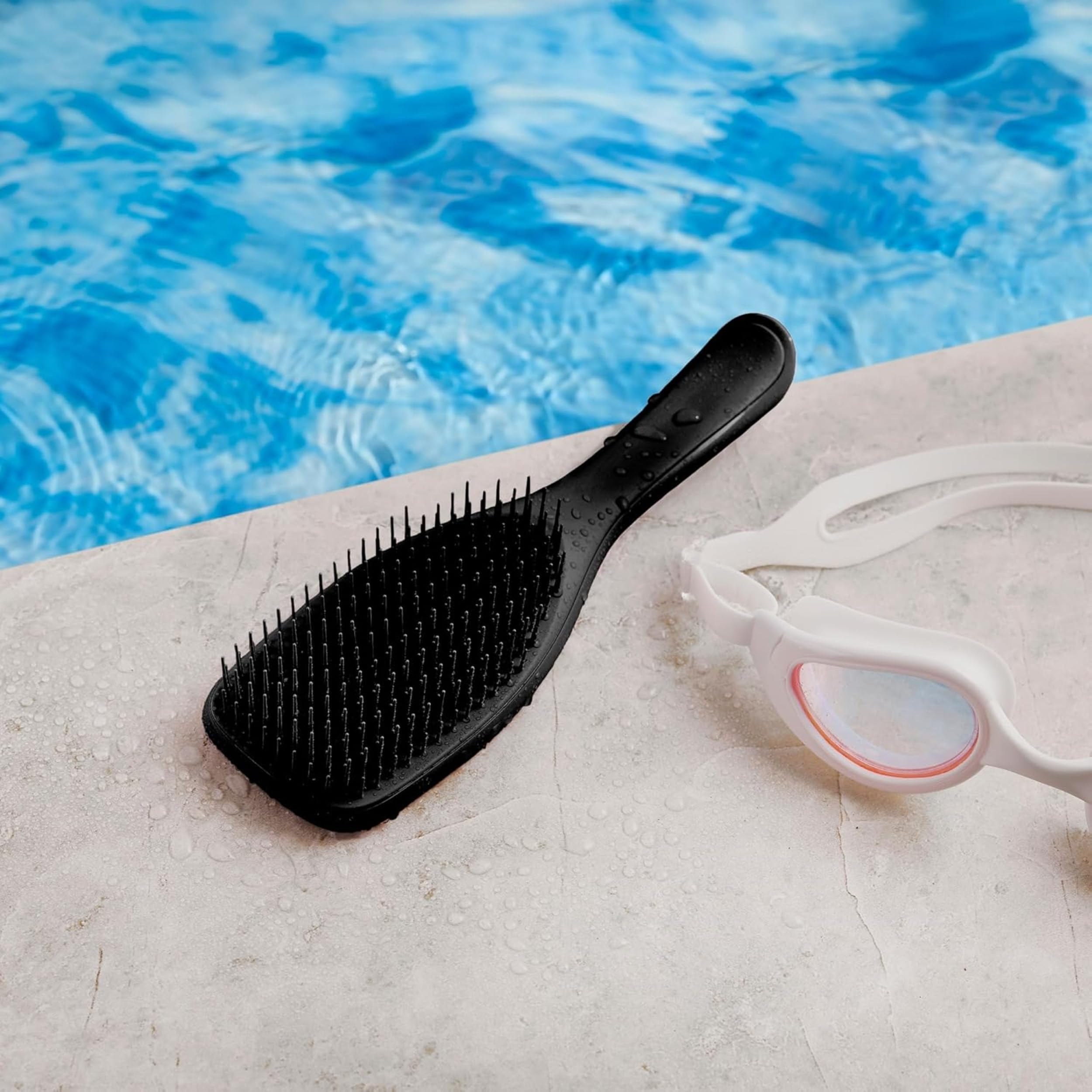
Tangle Teezer The Wet Detangler Hairbrush
This brush is a great all-rounder for most curl types, especially fine to medium hair, offering flexible bristles that gently separate knots and reduce breakage when used on wet hair. It might not provide enough tension for extremely dense or coily hair that needs a firmer approach.

Denman D3 Original Styling Brush
A classic for medium to thick curls, this brush detangles and defines with its customizable rows of pins. It’s excellent for clumping, but its stiffer pins might be too firm for very fine or fragile hair.

Felicia Leatherwood Detangler Brush
Perfect for thick, coily, or highly textured hair and sensitive scalps, this brush features super-flexible, widely spaced bristles that move with your hair to minimize pulling and pain. Its extreme flexibility means it might not offer enough tension for very loose waves or fine curls needing more defined clumping.

This brush is a strong choice for thick, coily hair with severe tangles, offering flexible, separated bristles with an adjustable bracket for customized stiffness. While effective for major knots, the wide spacing and flexibility may not feel sufficient for very fine hair to smooth out small tangles.
Finding the right detangling brushes for your routine can save you a lot of time, frustration, and precious hair strands. It’s about being kind to your curls, especially when they’re most fragile. If your curls are fine and easily tangled, I’d start with the Tangle Teezer. For thicker, coily hair with more stubborn knots, the Felicia Leatherwood or EZ Detangler might be a better fit. The Denman is a solid choice if you also want to enhance your curl definition.
A gentle approach to detangling is a key step in keeping your curls healthy and happy.
Frequently Asked Questions
You should always detangle curly hair when it’s wet and saturated with conditioner. This provides the necessary slip to gently work through knots, minimizing breakage and discomfort compared to detangling dry hair.
While a detangling brush is designed to be gentle, improper technique can still cause damage. Always use plenty of conditioner, start from your ends, and work in small sections to ensure a smooth, gentle process.
Most curly hair types benefit from detangling on wash day, typically once or twice a week. Frequent detangling without proper conditioning can cause unnecessary stress, so aim for efficiency during your wash day routine.
Detangling brushes are specifically designed with flexible, widely spaced bristles or teeth to glide through wet, tangled hair without snagging. Regular brushes often have stiffer, more densely packed bristles better suited for styling or smoothing dry hair, which can cause breakage on wet curls.