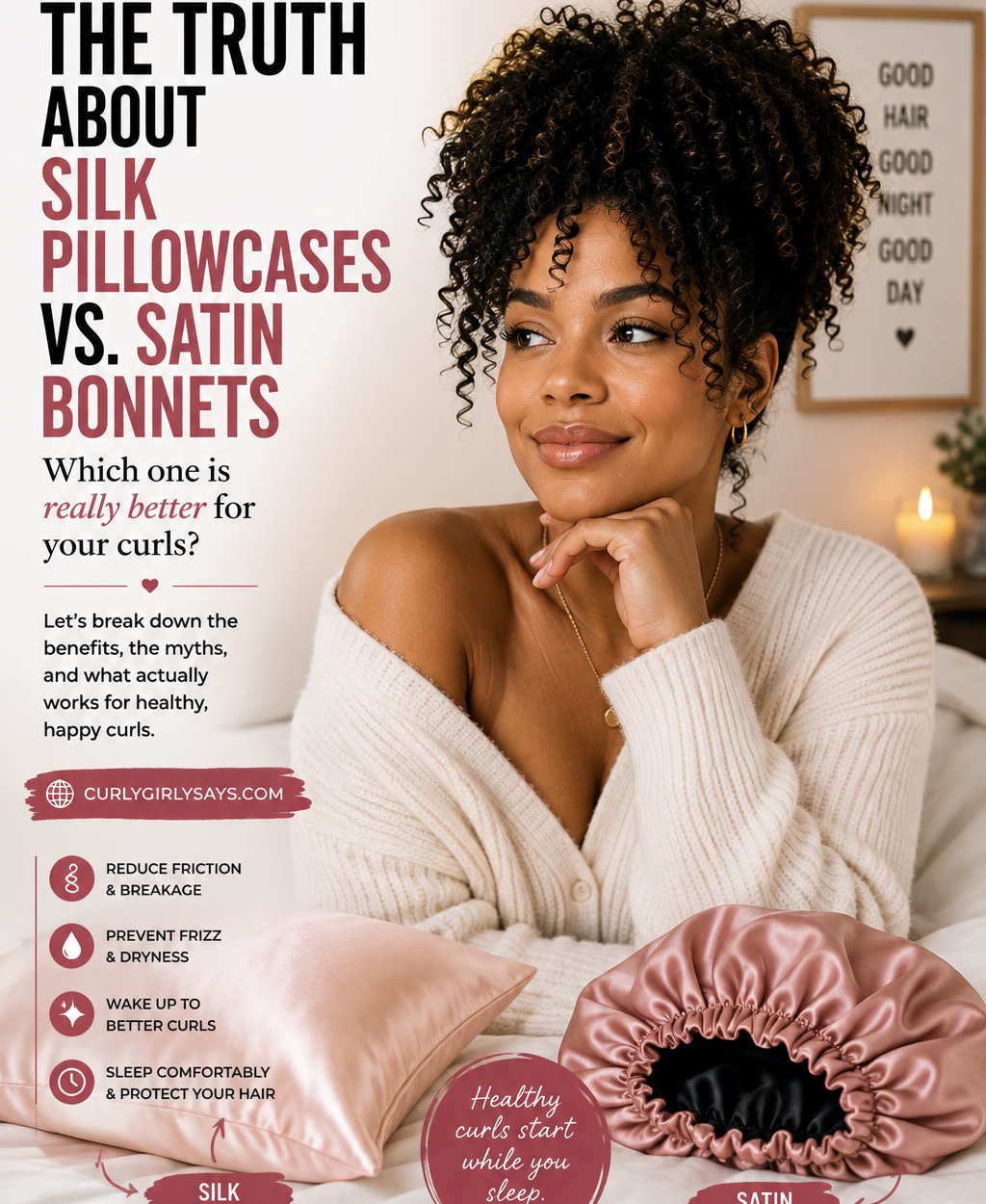

I used to think that any way to cover my hair at night was good enough, as long as it wasn’t cotton. But when you wake up with frizz or flattened curls, you start looking closer at the details.
It turns out there’s a real difference between silk pillowcases vs satin bonnets. While both aim to reduce friction and preserve your curl pattern overnight, they each come with their own set of pros and cons that impact how well they actually work for different hair types and sleep styles. This article will help you understand what actually works and what doesn’t, so you can make a choice that keeps your curls happy.
Curious about the best way to protect your curls at night? We’re breaking down the real differences between silk pillowcases and satin bonnets, so you can decide what works best for your routine and hair type.
Compare at a Glance
Compare these top products to find the best fit for your hair care needs and budget.
Swipe to compare →
| Product | Protection Type | Best For | Key Material | Price Range |
|---|---|---|---|---|
| LilySilk 19 Momme Silk Pillowcase | Pillowcase | Light sleepers, short hair | Mulberry silk | $$$ |
| Kitsch Satin Pillowcase | Pillowcase | Affordable protection | Polyester satin | $ |
| Grace Eleyae SLAP (Satin Lined Cap) | Head covering | Long/thick hair, intricate styles | Satin lining | $$ |
Quick answer: Both silk pillowcases and satin bonnets protect curls from friction and moisture loss overnight, but they do it in slightly different ways. Bonnets offer more comprehensive coverage and can be better for preserving intricate styles, while pillowcases are often more comfortable for those who don’t like head coverings, offering protection without restriction. The best choice depends on your sleep habits, hair length, and desired level of protection.
My pick: I personally prefer a good quality silk or satin pillowcase for general nightly protection and ease of use.
The Real Purpose: Friction and Moisture Protection
Many of us with curls know the morning struggle: you wake up, and your carefully styled hair from wash day is a tangled, frizzy mess. The biggest culprit is often your standard cotton pillowcase. Cotton fibers absorb moisture from your hair and create friction as you move around in your sleep, leading to frizz, tangles, and even breakage. This is why you often hear people suggest moving away from cotton.
Both silk pillowcases and satin bonnets are designed to combat these issues. They provide a smooth surface that allows your hair to glide, reducing friction. They also don’t absorb moisture from your hair in the same way cotton does, helping your curls retain hydration overnight. This can be key to maintaining curl definition and reducing morning frizz.
Silk Pillowcases: The Comfort Choice
A silk pillowcase is exactly what it sounds like: a pillowcase made from silk. The smoothness of silk (and good quality satin, which is often a polyester weave) creates a low-friction surface for your hair. As I mentioned, cotton pillowcases make my hair feel dry and tangled, and I notice more frizz when my hair rubs on anything while I sleep. Using a silk pillowcase has definitely helped with that.
Who silk pillowcases are best for:
- Light sleepers or those sensitive to head coverings: If a bonnet feels too restrictive or warms your head too much, a pillowcase is a comfortable alternative.
- Short to medium length hair: While effective for all lengths, shorter styles might not need the full containment of a bonnet.
- People with sensitive skin: Silk is a natural fiber and can be gentler on skin, potentially reducing pillow creases and even helping with acne for some.
- Those who move a lot in their sleep: A pillowcase stays put no matter how much you toss and turn.
Drawbacks to consider:
- Less contained protection: If your hair is very long or you have an active sleep style, parts of your hair might still escape the pillow and rub against other surfaces.
- Can be pricier: Genuine silk pillowcases are often more expensive than satin bonnets.
- Requires washing: Just like any pillowcase, it needs regular washing.
Satin Bonnets: The Secure Option
Satin bonnets are head coverings worn to protect your hair while you sleep. They typically have an elastic band to keep them in place and fully enclose your hair. While often confused with silk, satin is a weave, not a fiber, and is commonly made from polyester. Good quality satin, however, still offers that essential smooth, low-friction surface.
Who satin bonnets are best for:
- Long or very voluminous hair: Bonnets offer comprehensive coverage, keeping all your hair securely tucked away.
- Preserving specific styles: If you’ve done a complex pineapple or updo for definition, a bonnet can help keep it intact.
- Active sleepers who want maximum protection: It’s harder for hair to escape a bonnet compared to a pillowcase.
- Budget-conscious individuals: Satin bonnets are generally more affordable than silk pillowcases.
Drawbacks to consider:
- Can feel restrictive: Some people find the elastic band uncomfortable, especially around the hairline. Personally, bonnets feel too tight around my hairline, which is why I often prefer a pillowcase.
- Heat: A bonnet can sometimes make your head feel warmer, which might be uncomfortable for some sleepers.
- Style limitation: Some might find them less aesthetically pleasing or struggle to keep them on if they have very short hair or a specific sleep style.
The Impact on Your Curls
Regardless of whether you choose a silk pillowcase or a satin bonnet, the core benefit for your curls is reduced friction and retained moisture. This means:
- Less frizz: Your hair isn’t rubbing against rough cotton fibers all night.
- Fewer tangles: The smooth surface allows strands to glide, preventing knots.
- Improved moisture retention: Unlike cotton, these materials don’t strip your hair of its natural oils or styling products. This can help prevent your curls from feeling dry, even after using curl creams.
- Better curl definition: By reducing friction and tangles, your curl pattern is more likely to stay intact overnight, meaning less work refreshing in the morning.
Which One Should You Choose?
Choosing between a silk pillowcase and a satin bonnet really comes down to your personal preferences and needs:
- If you prioritize comfort, tend to move a lot, or dislike anything on your head, a silk pillowcase makes the most sense.
- If your hair is long, very prone to frizz, or you want maximum protection for your style, a satin bonnet is likely the better pick.
- If you’re on a tighter budget but still want friction protection, a quality satin pillowcase offers similar benefits to silk at a lower cost.
- If you have particularly sensitive skin or allergies, genuine silk might be a more suitable choice due to its natural, hypoallergenic properties.
Our Top Picks for Protecting Your Curls
LilySilk 19 Momme Silk Pillowcase
This is a popular choice for genuine silk pillowcases. It’s made from 100% mulberry silk, which is known for its smooth texture and durability. It’s a good option if you want to invest in a natural fiber that’s gentle on both hair and skin. It might not be the budget pick, but it delivers on comfort and luxury.
Kitsch Satin Pillowcase
If you’re looking for the benefits of a smooth surface without the higher price tag of silk, Kitsch offers a great satin pillowcase option. It’s made from polyester satin, which still provides excellent frizz and tangle reduction. This one is a smart choice for those who are unsure about silk or prefer a more affordable, easy-care material.
Grace Eleyae SLAP (Satin Lined Cap)
For those who need the secure, full coverage of a bonnet but want something stylish and comfortable, the Grace Eleyae SLAP is a standout. It’s a satin-lined cap designed to stay on all night without leaving marks or feeling too tight. It’s a versatile choice that protects curls thoroughly, especially for longer or thicker hair types that need to be fully contained, or for those who find traditional bonnets slip off too easily.
The Picks
Here are the products worth reaching for — each one earns its spot for a reason.

LilySilk 19 Momme Silk Pillowcase
This pillowcase is made from 100% mulberry silk, providing a luxurious, low-friction surface that helps reduce frizz and tangles. It’s an investment for those who prefer natural fibers and gentle care for both hair and skin, though it comes at a higher price point than satin options.

An affordable yet effective alternative to silk, this satin pillowcase minimizes friction to protect curls and reduce frizz and bedhead. It’s a great option for those looking for the benefits of a smooth sleeping surface without the premium cost of real silk, though it’s made of polyester.

Grace Eleyae SLAP (Satin Lined Cap)
This satin-lined cap offers secure, comprehensive hair protection, making it ideal for longer, thicker hair or for preserving intricate styles. It stays in place more reliably than a traditional bonnet and is a stylish alternative for those who find bonnets slip off or feel too tight, although it’s a head covering rather than a pillowcase.
Deciding between silk pillowcases vs satin bonnets boils down to what feels best for you and your hair. If you prefer comfort and something gentle on both hair and skin, a LilySilk or Kitsch pillowcase is a great start. If you need maximum containment and style protection, the Grace Eleyae SLAP might be your best bet.
Either way, moving away from cotton at night is a simple switch that can make a big difference in how your curls look and feel each morning.
Frequently Asked Questions
Yes, you absolutely can use both! Some people prefer to double up for maximum protection, especially if they have very long hair or are trying to preserve a specific style for multiple days. It’s not strictly necessary, but it won’t harm your hair.
Yes, silk is a natural fiber produced by silkworms, while satin is a type of weave that can be made from various materials, often polyester. Genuine silk is generally more breathable and can be more expensive. However, good quality satin still provides the necessary smooth surface to reduce friction and moisture loss, offering similar hair benefits at a lower price point.
It’s generally recommended to wash your silk pillowcase or satin bonnet as often as you would a regular pillowcase, which is typically once a week. If you use a lot of styling products or sweat during the night, you might want to wash it more frequently to keep it clean and hygienic.
While a silk pillowcase or satin bonnet can significantly reduce frizz caused by friction and moisture absorption from cotton, it won’t prevent all frizz. Other factors like humidity, product choice, and hair health can also contribute to frizz. However, it’s a very effective tool for managing nightly frizz.