
You’ve probably seen a lot of buzz lately around scalp care, and for good reason. A healthy scalp is truly the foundation for healthy hair. But when it comes to picking products, what’s the difference between a scalp serum and a scalp oil, and which one should you actually be using?
It can feel a little confusing navigating all the options. Let’s talk about how to decide if a serum or an oil is your best bet for common scalp concerns, so you can pick the right one for your hair goals.
Wondering whether to use scalp serums or oils for hair growth? We break down which is best for common concerns like dryness or hair thinning.
When to reach for a scalp serum
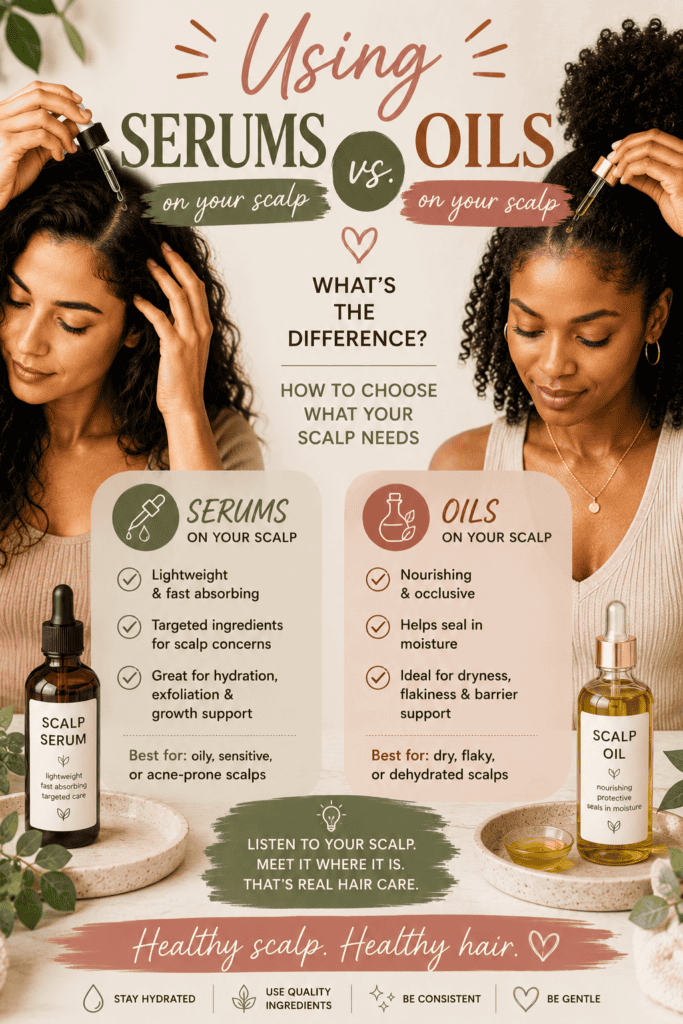
Serums are typically water-based and packed with active ingredients designed to deliver targeted benefits directly to your scalp. Think of them as concentrates for specific issues. They absorb quickly without leaving much residue behind, which is great if you wash your hair less frequently or have finer hair that gets weighed down easily.
This is where you’ll find ingredients like peptides, biotin, niacinamide, and various plant extracts aimed at boosting hair growth, reducing shedding, or soothing irritation. If you’re dealing with hair thinning, excessive shedding, or an itchy, irritated scalp, a serum is often your best bet for direct treatment.
Consider a serum if you have:
- Hair thinning or slow growth: Many serums are formulated specifically to stimulate follicles and encourage healthier, thicker growth.
- Oily scalp: Their lightweight nature won’t add extra grease. Some even help regulate sebum production.
- Itchy or irritated scalp: Serums with soothing ingredients like salicylic acid, tea tree, or anti-inflammatory extracts can provide relief.
One honest caveat: Serums need consistent use to see results, often for several months. They aren’t a quick fix.
When to opt for a scalp oil
Scalp oils, on the other hand, are lipid-based and excellent for providing deep moisture and nourishment. They’re thicker and tend to sit on the scalp longer, which makes them fantastic for pre-shampoo treatments or if you’re dealing with significant dryness. Oils can also create a protective barrier, which is beneficial for scalp health. Common oils include argan, jojoba, rosemary, and castor oil.
If your scalp feels tight, flaky, or generally parched, an oil treatment can work wonders. They help to soften the skin, reduce flakiness, and provide essential fatty acids that support scalp barrier function. Some oils, like rosemary oil, have also gained popularity for their potential to stimulate hair growth when used consistently.
Consider an oil if you have:
- Dry, flaky scalp: Oils are excellent at moisturizing and alleviating dryness, often better than water-based products.
- Scalp massage preference: Oils provide the necessary slip for a good scalp massage, which can improve circulation.
- Frizzy or coarse hair: The nourishing properties can extend to the hair strands, helping to condition them.
One honest caveat: Oils can sometimes feel heavy or greasy, especially if you have an oily scalp to begin with, or fine hair. Make sure to choose a lighter oil or use it as a pre-shampoo treatment if this is a concern.
VEGAMOUR GRO Hair Serum for Thicker, Fuller Hair

This plant-based serum is a favorite for folks looking to support hair growth and reduce shedding without harsh chemicals. It’s lightweight and won’t make your scalp feel greasy.
BondiBoost Rapid Repair Serum

This lightweight serum is packed with ingredients like hyaluronic acid and vitamin B5, which can help soothe and hydrate your scalp without feeling greasy. It’s a great option for an irritated or dry scalp.
The Ordinary Multi-Peptide Serum for Hair Density

If you’re looking for a serum that focuses on hair density and scalp health, The Ordinary’s multi-peptide option is a well-loved and affordable choice. It feels light on the scalp and can be easily worked into your routine.
Both serums and oils have their place in a good scalp care routine, but they tackle different issues with different approaches. If you’re struggling with thinning or irritation, a serum packed with actives is likely your go-to.
But if dryness and flakiness are your main concerns, or you love a good scalp massage, an oil will be your best friend. If I had to pick just one for targeted treatment of hair thinning, I’d reach for a serum first.
Frequently Asked Questions
Can I use a scalp serum and a scalp oil together?
Yes, you can. Typically, it’s recommended to apply the serum first because it’s lighter and water-based, allowing it to penetrate the scalp more effectively. Once the serum has absorbed, you can then apply an oil.
How often should I apply a scalp serum or oil?
This depends on the product and your specific needs. Most serums are designed for daily or every-other-day use. Scalp oils, especially if heavier, might be used 1-3 times a week as a pre-shampoo treatment or overnight mask.
Will using a scalp oil make my hair greasy?
It can if you use too much or if you have an oily scalp. For finer hair or oilier scalps, consider using lighter oils like jojoba or almond, or apply them only an hour or two before washing your hair.