
When I first started taking care of my curls properly, protein was this big, mysterious word everyone threw around. One day it was the answer to all my curl prayers, the next it was a warning against breakage. It felt like walking a tightrope, trying to figure out if my hair needed more or less.
After a lot of trial and error (and some very sad, stringy curls), I finally figured out what protein actually does for curly hair and, more importantly, how to tell what my hair needed. Let me spill the tea on what I found.
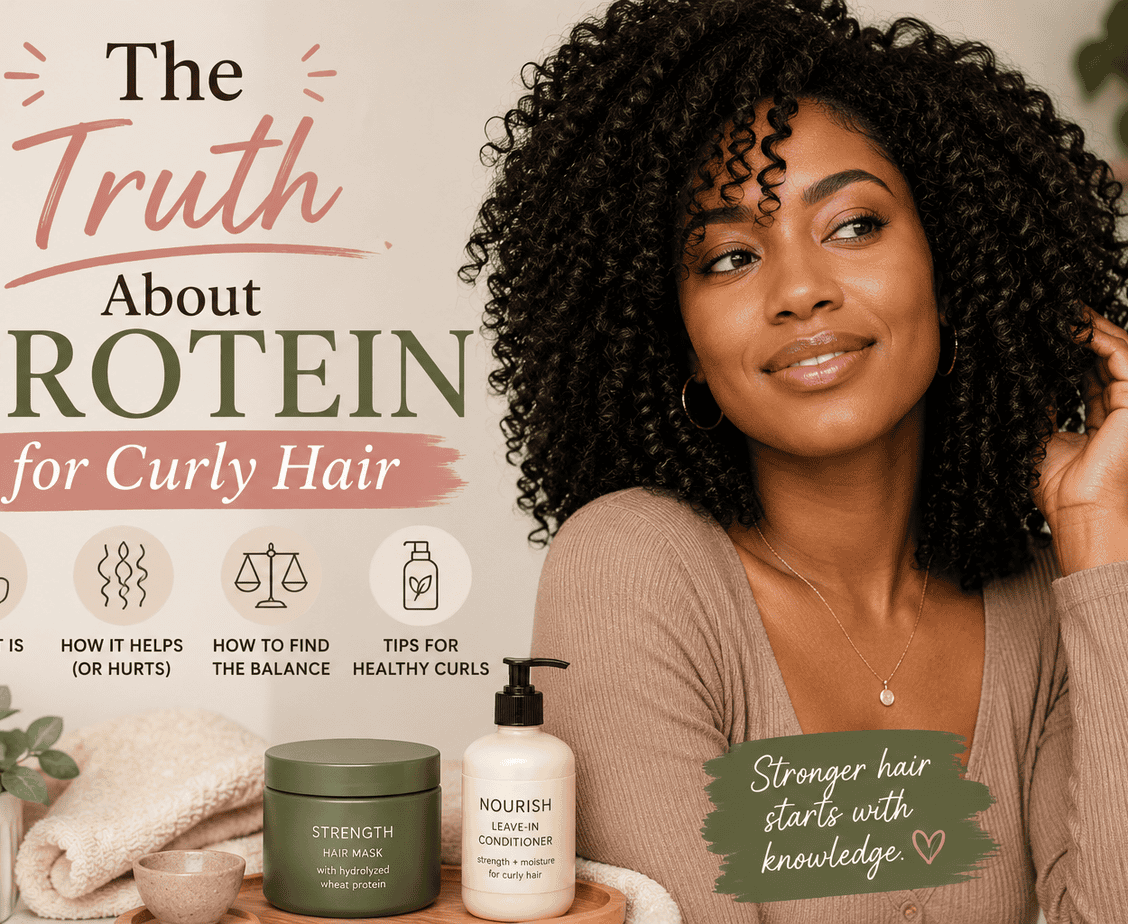
Is protein the magic bullet for curly hair? I’m breaking down what protein actually does and how to know if your curls truly need it.
Myth: All Curly Hair Needs Lots of Protein
This is probably the biggest protein myth out there. Yes, protein is a building block of your hair, but too much of a good thing can actually be detrimental. My hair is pretty “strong”, but I learned quickly that overloading it with protein made it feel stiff and brittle, almost like straw. It actually broke more easily!
Reality: Not all curls have the same protein needs. If your hair feels hard, stiff, or breaks when you try to style it, you might be experiencing protein overload.
How to Tell if Your Hair Needs Protein (or Not)
So, how do you know if your hair is craving protein or if it’s already had too much? It boils down to observing how your hair feels and behaves. Here are some clues:
-
High elasticity (stretches a lot without breaking): This is usually a sign of good moisture and protein balance.
-
Low elasticity (stretches and immediately breaks): Your hair might need more protein to strengthen it.
-
Overly soft, mushy, or gummy hair when wet: This often indicates too much moisture and not enough protein, especially if your hair is porous.
-
Limp, undefined curls: If your curls are losing their bounce and definition, protein might give them the structure they need.
Not All Proteins Are Created Equal
You’ll see different types of protein on product labels, and their effects can vary. Larger molecules like wheat protein or rice protein tend to sit more on the surface, offering a temporary boost in strength and definition. Smaller hydrolyzed proteins, however, can penetrate the hair shaft more effectively. The key takeaway here is to pay attention to the ingredients, but more importantly, how your hair reacts.
Finding Your Protein Balance with Products
The best way I’ve found to balance protein is to incorporate it strategically. If your hair needs protein, look for products that explicitly mention protein or include ingredients like hydrolyzed wheat protein, keratin, or amino acids. I usually opt for a moisturizing line and then add a protein treatment or styler only when my hair feels like it needs a boost in strength or definition.
For example, if my curls feel a little too soft or are losing their shape quickly, I might reach for a gel with some protein in it. This gives them that firm hold and definition without saturating my hair with heavy protein every wash day. It’s all about listening to your hair and not just following a rigid script.
Mielle Organics Rice Water Moisturizing Milk

This lightweight moisturizing milk offers a gentle dose of protein with rice water, perfect for daily use without overdoing it.
Curlsmith Bond Curl Rehab Salve

For those times when your curls really need a protein boost, this treatment helps strengthen and repair the hair’s internal bonds.
Kinky-Curly Knot Today Leave-In Conditioner

A fantastic leave-in that provides slip and moisture; it’s protein-free, making it a great option for balancing a protein-rich routine.
Ultimately, protein isn’t a one-size-fits-all solution, but it’s not something to be scared of either. Think of it as another tool in your curl care toolbox. By paying attention to what your hair is telling you, you can use protein products effectively to keep your curls strong, defined, and happy.
What’s your experience with protein? Let me know if you’ve found your perfect balance!
You May Also Like: